Hello -
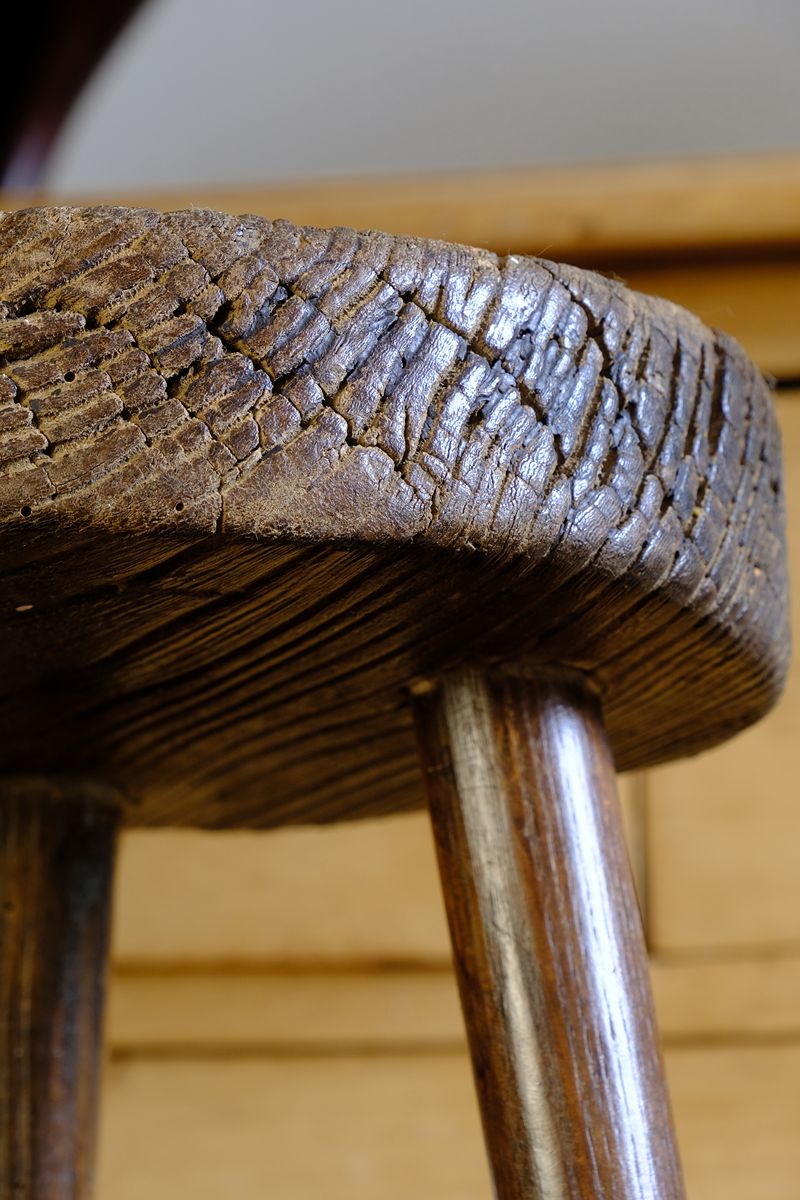
Before you even notice the stool itself, your eye is drawn to the timber. The weathered edge, the deep annual growth rings and the intricate network of age cracks aren't flaws to disguise—they're the visible record of more than a century of honest work.
This early 20th-century English elm milking stool was never intended to become decorative. It was built for a practical purpose on a working farm, where strength, stability and durability mattered far more than appearance. Yet time has transformed it into something quietly sculptural. Every softened edge, polished surface and naturally weathered crack reflects years of everyday use, creating a richness of character that simply cannot be manufactured.
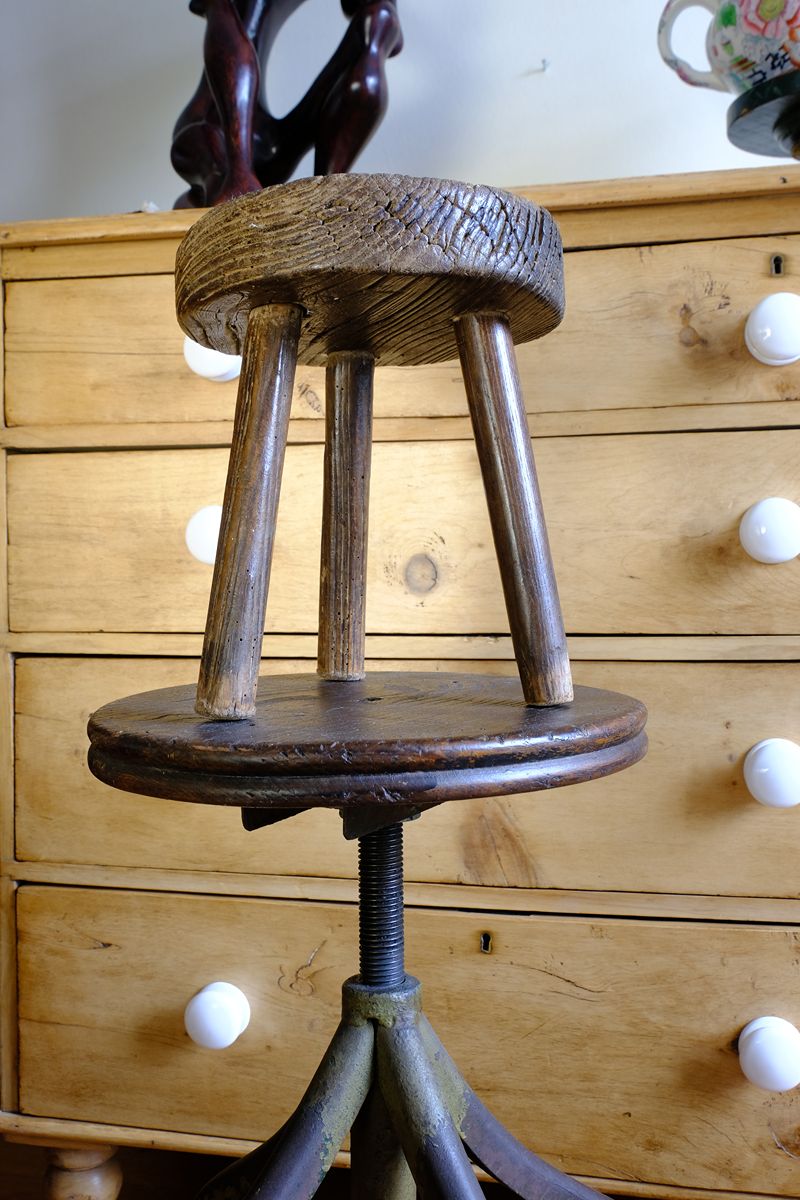
What particularly appealed to me about this example is the remarkable thickness of the solid elm seat. At around 5cm deep, it gives the stool an unexpected visual weight, beautifully balanced by the three simply turned tapering legs beneath. The traditional three-legged construction was chosen for a reason, providing reliable stability on the uneven stone and earth floors of the dairy, while the blind mortice joints speak of straightforward, purposeful
craftsmanship.
Today, objects like this are appreciated for far more than their original function. Whether placed beside a fireplace, used as a plant stand, displayed beneath a console table or simply admired for its sculptural form, it brings a quiet authenticity that works effortlessly in both traditional and contemporary interiors.
It's pieces like this that remind me why vernacular furniture deserves far more attention than it often receives. The craftsmanship is uncomplicated, the materials are exceptional, and the story is written into the wood itself.
Explore the surface in more detail →
|