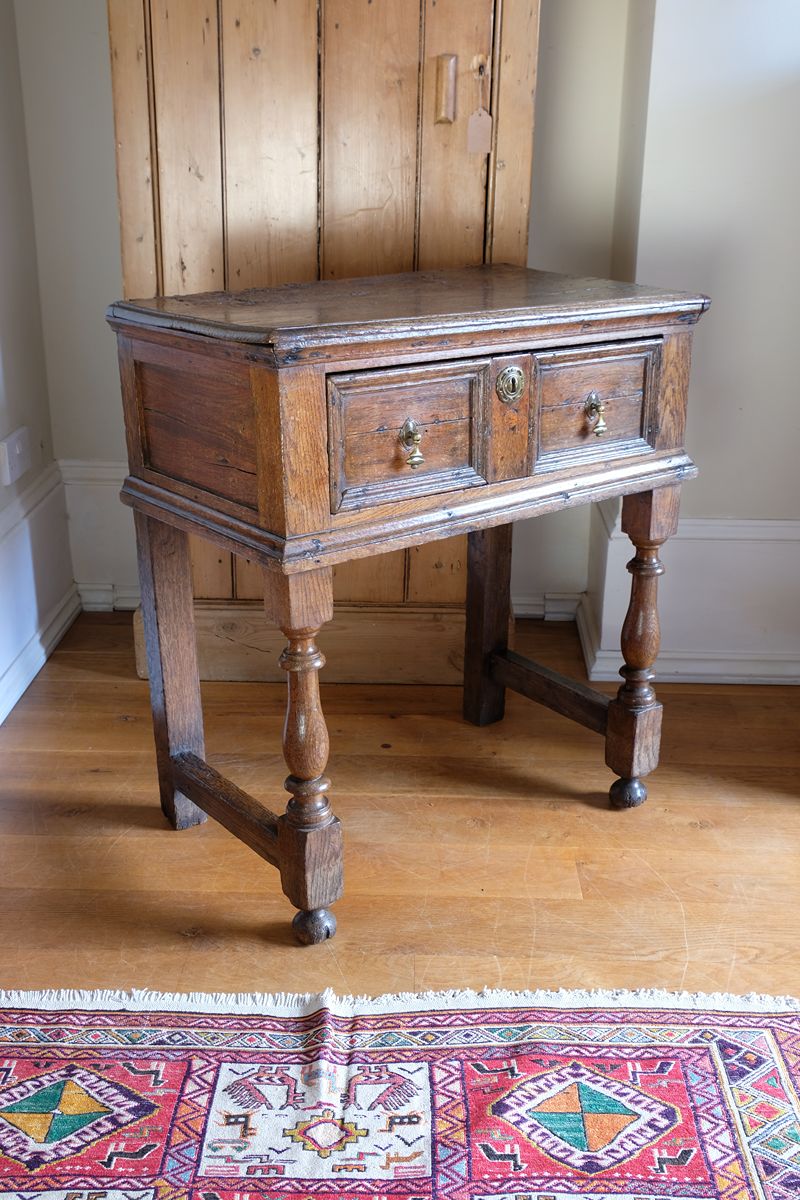
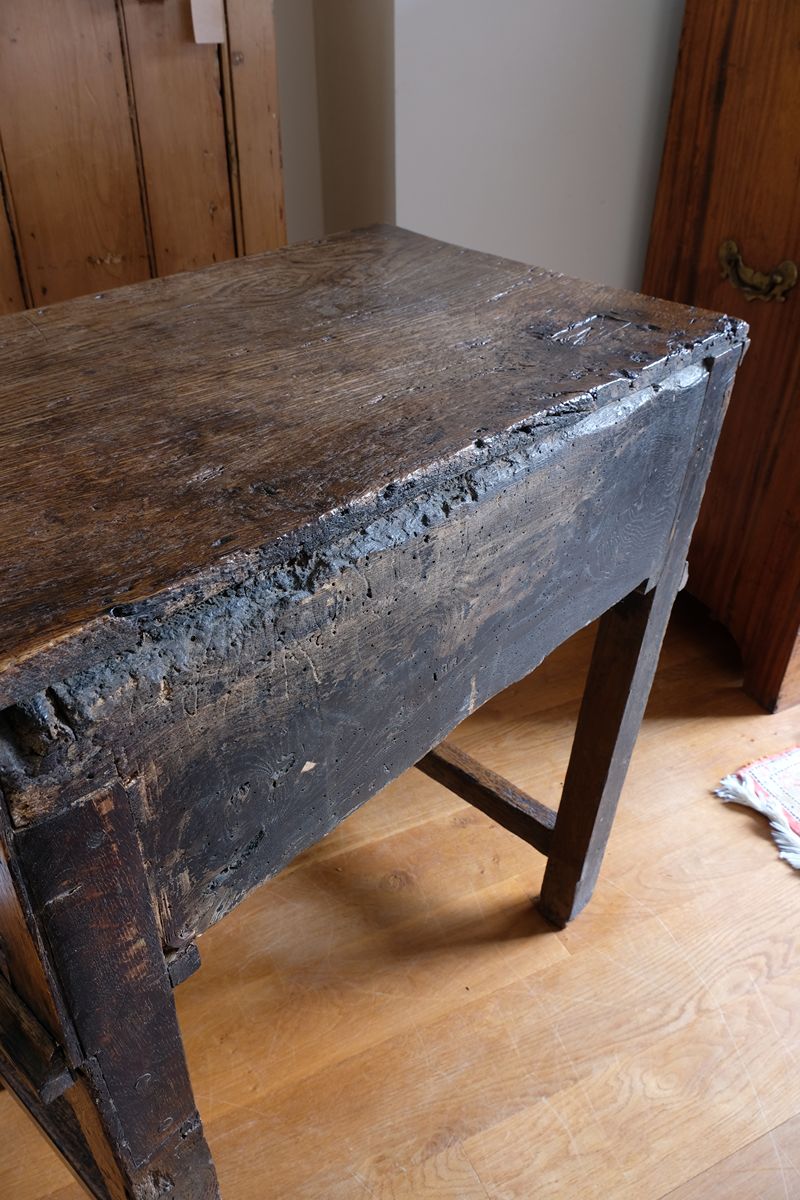
An eighteenth-century oak side table with a back board that rewards a closer look. ͏ ͏ ͏ ͏ ͏ ͏ ͏ ͏ ͏ ͏ ͏ ͏ ͏ ͏ ͏ ͏ ͏ ͏ ͏ ͏ ͏ ͏ ͏ ͏ ͏ ͏ ͏ ͏ ͏ ͏ ͏ ͏ ͏ ͏ ͏ ͏ ͏ ͏ ͏ ͏ ͏ ͏ ͏
͏ ͏ ͏ ͏ ͏ ͏ ͏ ͏ ͏ ͏ ͏ ͏ ͏ ͏ ͏ ͏ ͏ ͏ ͏ ͏ ͏ ͏ ͏ ͏ ͏ ͏ ͏ ͏ ͏ ͏ ͏ ͏ ͏ ͏ ͏ ͏ ͏ ͏ ͏ ͏ ͏ ͏ ͏ ͏ ͏ ͏ ͏ ͏ ͏ ͏ ͏ ͏ ͏ ͏ ͏ ͏ ͏ ͏ ͏ ͏ ͏ ͏ ͏ ͏ ͏ ͏ ͏ ͏ ͏ ͏ ͏
͏ ͏ ͏ ͏ ͏ ͏ ͏ ͏ ͏ ͏ ͏ ͏ ͏ ͏ ͏ ͏ ͏ ͏ ͏ ͏ ͏ ͏ ͏ ͏ ͏ ͏ ͏ ͏ ͏ ͏ ͏ ͏ ͏ ͏ ͏ ͏
The timber behind the finished face
|
|
|
|
The back of this eighteenth-century country oak side table stopped me for a closer look. A broad oak board, swirling grain and an irregular upper edge give this usually hidden surface an extraordinary depth of texture.
Around the front, the same table takes on a more ordered appearance. Mitred mouldings frame the deep drawer, while baluster-turned legs give the structure shape and balance. That difference between the decorative face and the roughly finished back is what I find so satisfying: you can follow the maker’s decisions through the timber.
In a hallway or on a landing, its substantial oak and useful drawer bring that interest into everyday life. The photographs let you explore both sides.
Explore the Construction →
|
An 18th Century Country Oak Side Table with Single Drawer & Turned Legs, distinguished by dense oak, framed construction and a deeply textured surface. Worn mouldings, pronounced grain and old repairs reveal a long working life, while its compact proportions retain a deliberate balance.
|
|
|
|
| | Antique English Windsor Armchair – 19th Century Elm & Ash Sweptback Stick Back Chair
|
| |
| |
| | | Late Victorian Mahogany Oval Tilt-Top Tripod Table with Open Reed Column
|
| |
| |
|
|
| | Antique North-West Persian Village Hall Runner | Heriz District, Karaja Tradition, c.1930–1950
|
| |
| |
| | | Mid-19th Century Giltwood Pier & Overmantel Mirror by John Westley
|
| |
| |
|
|
| | Late Georgian Anglo-Chinese Padauk Chest of Drawers, c.1790–1820
|
| |
| |
| | | Arts & Crafts Mission Style Console Table – Solid Black Limba Wood
|
| |
| |
|
|
| | Antique Heal & Son Oak Combination Cupboard with Five Drawers, c.1900
|
| |
| |
| | | Early to Mid-19th Century Mahogany Two-Drawer Campaign Chest
|
| |
| |
|
|
|
Journal Feature
What the less visible surfaces reveal
Country Oak Side Tables: Reading the Timber Behind the Form
Explore how rear boards, drawer joints and framed construction help us read the practical decisions within vernacular furniture.
Continue Exploring →
|
A question about its place in your home?
Sometimes, turning a table around gives you a fuller appreciation of the hands that made it.
The more I examine this table, the more I appreciate the weight and density of its oak—a substantial construction beneath that wonderfully textured surface.
If you’re considering the table, reply with any questions about its dimensions, condition or delivery. I’m happy to help you work through the practical details.
|
© Campbell Vintage
Vintage and antique furniture, objects selected for material integrity, craftsmanship and enduring design.
Campbell Road, Southsea, United Kingdom PO5 1RJ
You’re receiving this email because you subscribed to our journal or have previously engaged with our collection of vintage and antique furniture, lighting and decorative objects.
Edit preferences | Unsubscribe
|
|
|
|
|
|
|
|